How artificial intelligence is transforming incident response in security operations centers
Imagine a Security Operations Center where analysts are drowning in thousands of alerts every day. It’s like trying to spot a single suspicious person in a crowded stadium while everyone is shouting for your attention at once. This is the reality many security teams face today, and it’s leading to what experts call “alert fatigue,” a state where important warnings get lost in the noise.
Enter Large Language Models, the same technology behind tools like ChatGPT, now being adapted to help security teams fight cyber threats. Think of them as highly capable assistants that can read through mountains of security data, spot patterns, and explain what’s happening in plain English. As Francesco Iezzi, a cybersecurity specialist at NHOA, points out, these AI tools aren’t here to replace human security experts. Instead, they’re designed to handle the heavy lifting, freeing up specialists to focus on what really matters: making critical decisions when threats emerge.
How AI assistants are changing the security game
Using LLMs in security operations is like giving your security team a brilliant colleague who never sleeps and can read thousands of documents per second. These AI systems can recognize patterns, summarize complex situations, and even predict what might happen next based on what they’ve learned from past incidents.
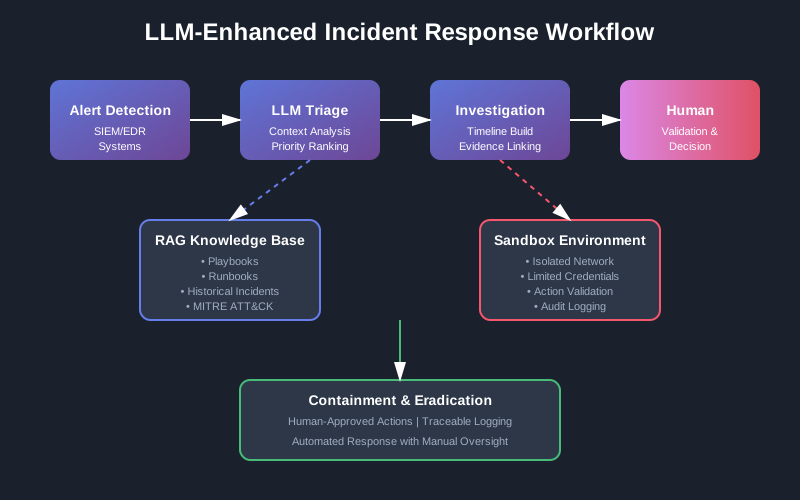
Here’s where it gets practical. Instead of a security analyst manually piecing together clues from different security tools (firewall logs, antivirus alerts, network monitors), an LLM can do this correlation work instantly and present a coherent story: “We’re seeing unusual login attempts from Eastern Europe, followed by data transfers to a known suspicious server. This matches the pattern from that ransomware attack we saw last month.”
The real-world impact is impressive. Organizations using these tools report they can spot and respond to threats significantly faster than before. What used to take hours of manual investigation can now happen in minutes. The AI cross-references everything automatically (past incidents, known attack patterns, and security best practices) giving analysts a head start on stopping threats before they cause real damage.
The rules of the road for AI in security
Just like self-driving cars need regulations, AI in cybersecurity needs clear guidelines. Organizations like NIST have been updating their security frameworks to include AI tools, providing a roadmap for companies that want to use this technology safely. The NIST AI Risk Management Framework is particularly helpful, offering practical advice on managing the risks that come with AI.
The market is responding enthusiastically. Major security platform vendors are racing to add AI capabilities to their products, promising faster threat detection and easier investigation. But here’s the catch: not all AI solutions are created equal. Smart organizations test these tools thoroughly in their own environments before relying on them, much like you’d test-drive a car before buying it.
Interestingly, cybercriminals are also getting creative with AI. They’re trying techniques like prompt injection, essentially tricking AI systems into doing things they shouldn’t. This is why proper safeguards and human oversight remain crucial, even when using advanced AI tools.
What AI can actually do in a security operations center
Let’s get practical. The most successful AI applications in security today handle tasks that used to consume hours of analyst time. For example, when 500 alerts pop up saying “suspicious activity detected,” an AI can quickly group them, identify which ones are related, and determine which five actually need human attention. It’s like having a smart filter that sorts your email into urgent, important, and spam.
Another powerful use case is investigation work. When tracking down how an attacker got into your network, AI can automatically build timelines, connect the dots between different events, and even suggest what to check next. The system compares what it’s seeing against known attack patterns from databases like MITRE ATT&CK, essentially asking “Have we seen this movie before?”
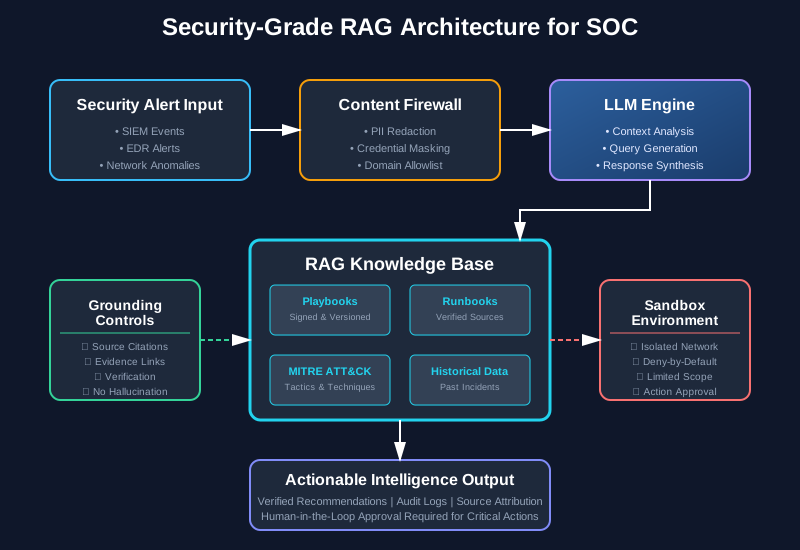
The secret sauce behind reliable AI in security is something called Retrieval-Augmented Generation. Think of it as giving the AI a trusted library to reference instead of letting it make things up. This prevents the AI from “hallucinating,” a technical term for when AI confidently provides incorrect information. The system can only give answers based on verified security playbooks and real data, with every response linked back to its source.
Safety measures are built into every layer. The AI works in a controlled sandbox environment, similar to how you might let a child play in a fenced playground rather than near a busy street. Every action is logged, every decision is traceable, and humans always approve critical actions before they’re executed.
Staying compliant in Europe
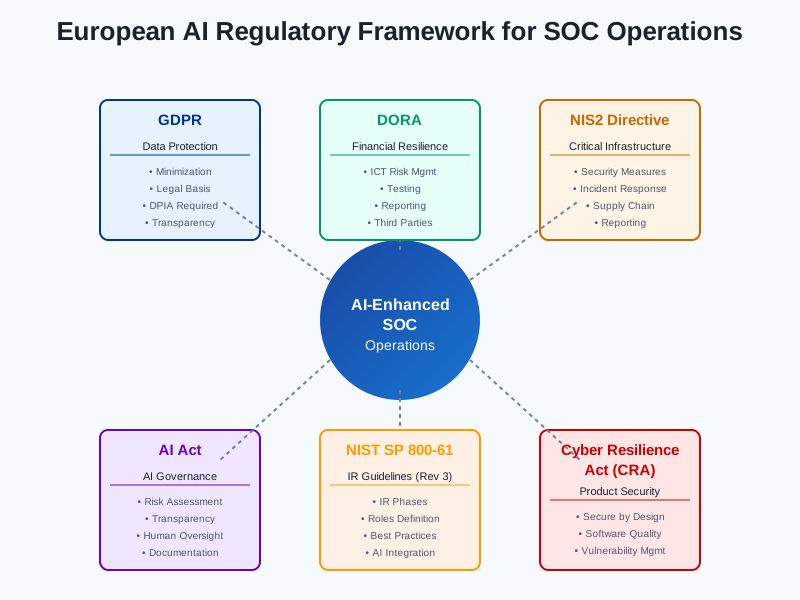
If you’re operating in Europe, using AI in security comes with some important homework. The General Data Protection Regulation (yes, that GDPR everyone talks about) has specific rules about using AI to process personal data. The basic principle is simple: only collect and analyze what you actually need, and make sure you have a good legal reason for doing it.
For critical infrastructure and financial services, the rulebook gets thicker. The NIS2 Directive requires strong security measures across your entire operation, including your suppliers. Banks and insurance companies also need to follow the Digital Operational Resilience Act, which includes regular testing to make sure your systems can withstand attacks.
The new AI Act and Cyber Resilience Act add another layer, focusing on making sure AI systems are trustworthy and software is secure from the start. When choosing an AI vendor, you’ll want to ask questions like: Where is my data stored? Will you use it to train your models? Can I audit what the AI is doing? These aren’t just nice-to-haves, they’re legal requirements in many cases.
Who does what in an AI-powered security team
Implementing AI in security is like conducting an orchestra. Your Chief Information Security Officer acts as the conductor, deciding which AI tools to use, what data they can access, and what success looks like. They set the tempo and ensure all the different parts work together harmoniously, measuring whether the AI is actually making things better or just adding complexity.
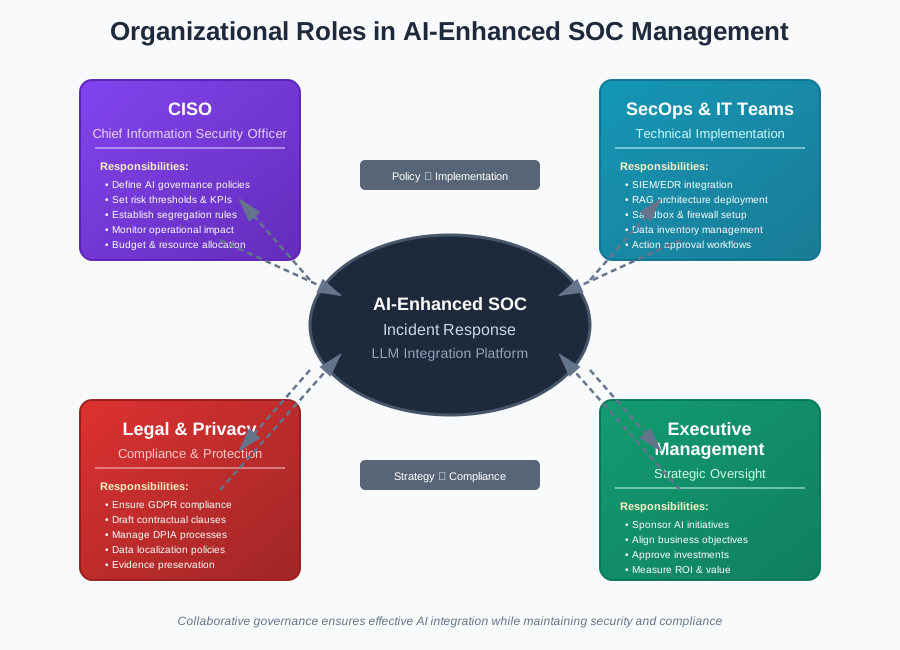
The security and IT teams are the ones getting their hands dirty with the actual implementation. They connect the AI to existing security tools, make sure it has access to the right information (but not sensitive data it doesn’t need), and set up the safety controls we discussed earlier. Think of them as the engineers who turn the strategy into something that actually works.
Meanwhile, legal and privacy teams make sure everything stays on the right side of regulations. They review vendor contracts, ensure data protection requirements are met, and handle the paperwork when something goes wrong. Executive management provides the budget and makes sure the whole AI initiative aligns with business goals. Everyone has a role to play, and successful implementation requires them all working together.
A practical roadmap for implementation
You don’t need to transform your entire security operation overnight. The smartest organizations start small and build from there. First, create clear policies about how AI will be used: what data it can access, which tasks it can handle, and who’s responsible when something goes wrong. Write it down, make it official, and make sure everyone understands it.
Next, set up the technical foundations properly. This means implementing those safety controls we discussed, the sandbox environments, the source verification, the data filtering. It’s like installing airbags and seatbelts before taking your new car on the highway.
Finally, measure everything. Track how quickly you’re detecting and responding to threats. Monitor how accurate the AI’s recommendations are. Count how many false alarms you’re eliminating. These metrics tell you whether your AI investment is paying off or if you need to adjust your approach. Remember, humans should always be in the driver’s seat for critical decisions. The AI is there to help you drive faster and safer, not to replace you behind the wheel.
The future is human-AI teamwork
The evolution of security operations is pointing toward Incident Response 2.0, a model where humans and AI work together as partners rather than competitors. When properly implemented with good safeguards and reliable data sources, this partnership delivers faster threat detection, better analysis, and more consistent results. As cyber attacks get more sophisticated and regulations demand quicker response times, this collaboration becomes not just helpful but essential.
Success hinges on continuous learning and improvement. Keep an eye on your metrics: how fast are you spotting threats, how quickly are you resolving them, and how accurate are your detections? These numbers tell the real story of whether AI is helping or just adding complexity to your operations.
Trust in AI-powered security comes from transparency and control. You need to know what the AI is doing, why it’s making certain recommendations, and have complete logs of its activities. The bottom line is clear: AI is a powerful tool, not a replacement for human expertise. The best security operations use AI to handle the tedious, time-consuming work, freeing up skilled analysts to apply their judgment where it matters most. That’s not just smart security, it’s the future of keeping organizations safe in an increasingly complex digital world.