Apple's Audio Intelligence turns your watch into something that listens all day
There is a specific kind of Apple keynote moment where a feature gets announced with a straight face and a privacy paper gets published on the same day, as if the second document were meant to pre-empt the first hour of press coverage. That is roughly what happened with Audio Intelligence, the new suite of always-on listening features Apple introduced for Apple Watch Series 12 and Apple Watch Ultra 4. The watch now summarizes your conversations, lets you rewind the last fifteen seconds of what someone just said, recognizes music through Shazam without you lifting a finger, and flags sirens or doorbells even when your iPhone is nowhere nearby.
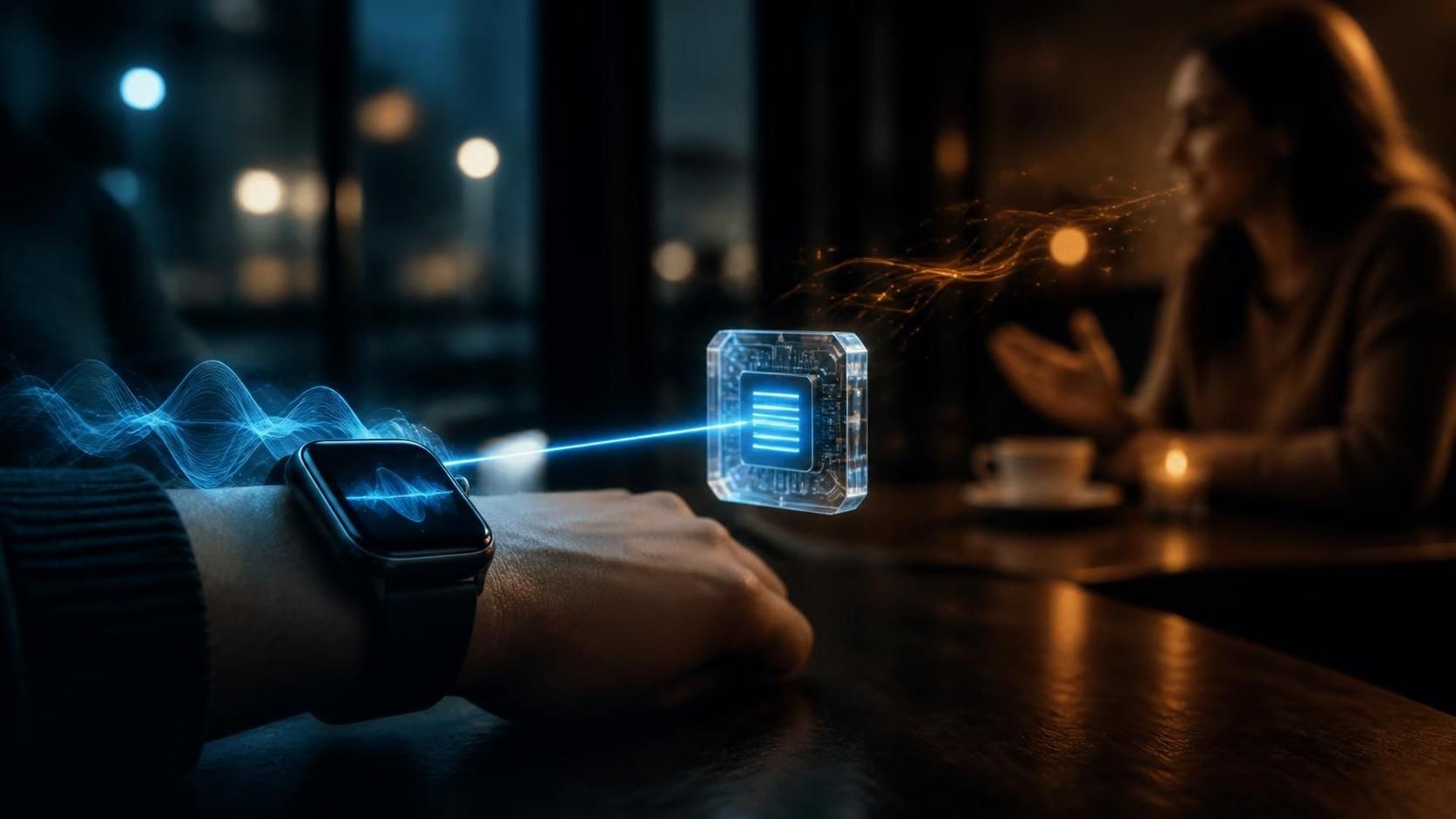
Apple, characteristically, shipped the feature alongside an eleven page Audio Intelligence Privacy Overview, a document dense with hardware diagrams and reassurances that “no one, not even Apple” can access your raw audio. As someone who spends a fair amount of time pulling artifacts out of Apple devices for a living, I read that paper twice, and I came away with a mix of genuine respect for the engineering and a healthy dose of nonno boomer skepticism about the part of the problem that no chip design can fix.
In brief
- Audio Intelligence adds four always-on listening features to Apple Watch Series 12 and Ultra 4: Siri Recap, Live Rewind, Shazam music recognition, and sound alerts for sirens and doorbells.
- Raw audio is processed inside a hardware-isolated Secure Exclave on the S11 chip and the paired iPhone, then deleted immediately after on-device transcription.
- Only condensed, non-attributed text reaches Private Cloud Compute for summarization, with results deleted as soon as they are returned.
- Siri Recap runs continuously and silently, while Live Rewind requires a deliberate gesture and plays a visible chime and animation.
- The architecture protects the wearer’s own data, but bystanders being summarized get no consent mechanism and no visible indicator.
- Apple published an eleven page Audio Intelligence Privacy Overview alongside the announcement, inviting external audit of Private Cloud Compute.
A watch that takes notes on your life
Audio Intelligence packages four features under one name, and it is worth separating them before judging any of them. Siri Recap listens throughout the day and produces short, high-level summaries of conversations you had, viewable later in the Siri app. Live Rewind is triggered manually, a double press of the Digital Crown that surfaces the previous fifteen seconds of speech as text, useful for catching a name or a detail you half heard. Music Recognition with Shazam identifies whatever is playing around you and drops the title into the Smart Stack. Sound Recognition listens for sirens, alarms, and doorbells and can notify you even without your phone in range, a feature explicitly built with accessibility for deaf and hard of hearing users in mind.
Three of these four are genuinely uncontroversial. Nobody is going to argue that a watch alerting you to a smoke detector while your phone is in another room is a privacy problem, and Shazam has been quietly listening for song fingerprints for over a decade without anyone losing sleep over it. The interesting, and contested, territory is Siri Recap and, to a lesser extent, Live Rewind, because both require the watch to process ambient human speech continuously, all day, without you actively invoking anything.
Inside the Secure Exclave: how audio never becomes a recording
The engineering answer Apple gives is architectural rather than policy based, which is usually the more convincing kind. Both the new S11 chip on Apple Watch and the Secure Exclave already present on iPhone 16 and later models create a hardware isolated compartment that processes sensor data outside the reach of watchOS, iOS, installed apps, the user, or Apple itself. According to the privacy paper, a lightweight on-device model first determines whether speech is happening nearby, without transcribing or storing anything. Only if that gate opens does audio flow into a continuously overwritten buffer inside the Secure Exclave, encrypted, then transmitted over a dedicated audio-verified pairing channel (layered on top of Bluetooth) to the matching Secure Exclave on the paired iPhone.
From there, on-device speech recognition converts the audio to text, an on-device language model compresses it to less than half its original length, and the raw audio is deleted immediately and irreversibly on both ends. The condensed text, not the audio, is what eventually reaches Private Cloud Compute for summarization, alongside contextual scraps such as Now Playing data, calendar entries, or coarse location labels like “home” or “grocery store”, explicitly excluding precise GPS coordinates. Apple states the summarization results are deleted from Private Cloud Compute the moment they are returned, and the finished text syncs across devices end-to-end encrypted through iCloud, provided two-factor authentication and a device passcode are enabled.
This is a genuinely well thought out pipeline, and readers of this blog know I am not usually inclined to hand out compliments to marketing documents. The distinction between “we don’t store the recording” and “a recording never technically exists” matters forensically: if I am right about how this architecture behaves, there should be no audio blob sitting in a container waiting for a subpoena, a jailbreak, or a full filesystem extraction to find, only the condensed, sanitized text the user chose to keep. That is a meaningfully different threat model from a smart speaker that ships raw audio clips to a cloud bucket, and it echoes the same hardware-rooted trust model Apple has already built around Face ID’s Secure Enclave and Apple Pay’s tokenized transactions.
The promises baked into silicon, and the ones that are not
Reading the paper closely, a few design choices stand out as deliberate self-limitations rather than pure marketing. Siri Recap does not attribute speech to individual speakers, so the summary cannot say “Marco said X, you said Y”, only that a topic was discussed. It is opt-in at setup, schedulable by time and location (only during work hours, never at home, for instance), and toggleable instantly from Control Center. Live Rewind requires an active, deliberate gesture every single time, and Apple built in an audible chime plus a full screen animation that fires even if the watch is muted or paired to headphones, specifically so that people nearby have some signal something just happened. Saved summaries expire automatically after seven days unless you explicitly keep them, and deleting one removes it from every synced device immediately.
None of that is nothing. It is the kind of restraint that a company under less regulatory and reputational pressure than Apple would probably not bother building. But every one of these safeguards protects the user’s data from misuse. None of them give the person standing across the table, the one being summarized, transcribed, or rewound, any say in the matter at all. That is where the architecture, however elegant, runs into a problem that no Secure Exclave was designed to solve.
The bystander problem nobody’s hardware can fix
This is the part of the story that most of the initial coverage, understandably dazzled by the chip diagrams, tends to gloss over. TechCrunch put it plainly: features that transcribe recent speech and summarize ambient conversations raise new questions about consent that have nothing to do with where the encryption keys live. Recording consent law in the United States alone varies wildly between one-party and two-party consent states, and Apple’s own paper never really engages with that, presumably because a hardware whitepaper is not the right venue for a legal opinion, but also because there may not be a clean answer yet. Other AI wearable makers have handled this more explicitly: Plaud tells its users to obtain legally required consent before recording, and Amazon’s Bee shifts the liability for minors’ data entirely onto the person wearing the device. Apple’s paper says nothing comparable.
The visible signal problem is arguably worse for Siri Recap than for Live Rewind. Live Rewind at least forces a chime and a glowing display, an imperfect but real notification that something just happened, not unlike the LED that Meta has been pressured into enforcing more strictly on its own smart glasses after they were widely mocked online for enabling covert recording. Siri Recap has no equivalent tell. It runs continuously, silently, governed by a schedule the wearer set and nobody else can see. If you are talking to someone wearing a Series 12 during their configured “work hours”, there is, by design, no way for you to know your side of the conversation is being distilled into a bullet point someone else will read later. PetaPixel framed this in fairly dramatic terms, comparing it to a Black Mirror plot where an argument gets replayed verbatim against a partner, and while the tone is deliberately provocative, the underlying mechanic, Live Rewind surfacing exactly what someone just said, is real and does not require any hypothetical misuse to be uncomfortable.
There is also a quieter, longer-term question that a handful of observers have started raising, TechRadar among them: what happens to how people behave once “my watch might be summarizing this” becomes an ordinary background assumption in every meeting, dinner, and casual conversation. Surveillance research has already documented how the mere possibility of being recorded changes behavior even when no recording occurs, and Audio Intelligence is explicitly designed to make that possibility permanent and invisible rather than occasional and obvious, the exact opposite trajectory of what privacy advocates would generally consider healthy. Whether the condensed, non-verbatim, non-attributed nature of a Siri Recap summary is enough to defuse that dynamic in practice is an open empirical question Apple cannot answer from a whitepaper, only from watching what actually happens once these features ship in beta later this year.
Where this leaves a skeptical adopter
None of this means the Secure Exclave architecture is theater. If Apple’s claims hold up to the kind of independent scrutiny it invites for Private Cloud Compute, this is a materially more defensible design than shipping raw audio to a server and hoping a retention policy gets followed. As someone who has spent years pulling data off devices whose makers swore nothing was ever stored, I have learned to treat “we don’t have access” as a claim to verify, not a claim to believe, and Apple has at least made the verification possible by publishing the architecture in detail and inviting external audit of Private Cloud Compute, unlike most of the AI wearable makers piling into this space.
But the honest summary is that Apple solved the half of this problem that hardware engineering is good at solving, protecting the user’s own data from Apple, from thieves, from subpoenas, and left almost entirely untouched the half that hardware cannot solve on its own, protecting the people around the user from being quietly summarized without ever agreeing to it. Ai miei tempi, when someone wanted notes from a conversation, they asked you if it was okay to write things down. Audio Intelligence has made that question optional, and buried the answer inside a Control Center toggle only one side of the conversation can see.
FAQ
Does Audio Intelligence store or upload raw audio recordings from the Apple Watch?
No. Audio is processed inside a hardware-isolated Secure Exclave, converted to condensed text on-device, and the raw audio is deleted immediately and irreversibly on both the watch and the paired iPhone.
Can Siri Recap or Live Rewind record other people without their consent?
Live Rewind requires a deliberate gesture and shows a visible chime and animation, but Siri Recap runs continuously and silently with no visible indicator, leaving bystanders unable to tell when their speech is being summarized.
How does Audio Intelligence protect summarized data in the cloud?
Only condensed, non-attributed text reaches Private Cloud Compute for summarization. Results are deleted the moment they are returned, and finished summaries sync end-to-end encrypted through iCloud when two-factor authentication and a device passcode are enabled.